If you're a fan of sim racing games like Project Cars, Forza Horizon, Forza Motorsport, Gran Turismo Sport (and other games—the list goes on...), you know that the driving experience isn't always 100% realistic. Some titles are a bit better and focus more on realism, like Dirt Rally 2.0 or Assetto Corsa Competizione, but there is always room for improvement.
However, a technology called photogrammetry is starting to change that. Here at Real Sim Roads, we have harnessed the power of photogrammetry to make the best sim racing games even better.
Below is a screenshot from Alpine Meadows, the first track for sim racing games created using a full photogrammetry process for both the visual and physics meshes.

If you want to skip all the talk and jump right in to experience the power of photogrammetry in Assetto Corsa, click here to download the track.
Photogrammetry is the process of using photography to create 3D models and textures. It's easy enough that anyone can do it with equipment they already own. And when it comes to sim racing, photogrammetry is making tracks more realistic than ever before.
To create realistic driving physics, a sim needs to recreate the conditions of real-world tracks as accurately as possible. This includes everything from the asphalt texture to the camber of the corners. And while some realistic racing sims recreate track conditions using laser scans, that technology is extremely expensive and requires specialist to perform scans.
Road surface features like bumps and cracks can play a big role in the realism of a racing sim, and laser scans miss a lot of these details. Fully computer-generated tracks would need these small details added by hand.
As a result, most hand-made tracks are overly smooth and lack micro-detail, so they feel boring and unrealistic. Some modelers add noise to road meshes to simulate bumps, but this can feel like a cheap trick. The best sim racing games use laser scans to capture real-world locations, but the resolution of LiDAR pales in comparison to even consumer cameras.
That's where photogrammetry comes in.
With photogrammetry, racing simulator developers can use consumer cameras equipment to scan real-world tracks or roads and create digital models that are incredibly accurate. These models can then be used to create more realistic car games, both visually and physically.
Photogrammetry is the process of taking many overlapping photos of a real-life object and then using those photos to create a realistic 3D model. This technique is already being used by game developers to create more realistic environments.
For example, the popular racing game Forza Horizon 5 used photogrammetry to create its vast open world. When simulation games go the extra mile to create excellent graphics and driving physics, the immersive experience and realistic feel are unmatched.

As you can see in the example above, photogrammetry captures more than enough detail to recreate the rough surface of an old asphalt road along with the rumble strip and inset cat eyes along the center of the road. And this screenshot is from an R&D project that used 1920x1080source images, reduced to 240x135 to create the depth maps. Alpine Meadows, the first full photogrammetry road ever created for sim racing games, used 8256x4644 source images reduced to 1030x580.
Creating a photogrammetry model of a track or road is a time-consuming process, but the results are worth it. Not only do you end up with an ultra-realistic and accurate 3D model for both visuals and physics, but you also get all of the real-world imperfections that make tracks unique. These imperfections are what can make or break the realism of a sim racing experience. And since many sim racers have access to VR headsets and motion platforms, they can experience this next-gen realism today.
To understand how photogrammetry can make tracks more realistic, you first need to understand how game developers make tracks.
Traditionally, 3D modelers would use reference photos and elevation data to create tracks by hand. Reference photos are a handful of pictures of real-life racetracks that are taken from different angles, and elevation data is often taken from public sources like Google Maps or government LiDAR surveys. This data would then be used as a reference when creating the track in 3D software such as Blender or 3ds Max.
Unfortunately, this approach to racing sim development results in a lot of small details being left out that are necessary for realism. For the most realistic racing experience, when creating a road, the 3D modeler would have to create a flat surface and then add the appropriate curve, camber, and height variations to it. This can be difficult to get right, and as a result, many small details are often left out.
To create an immersive experience, a patient and skilled modeler may add visual details like cracks or other variations, but rarely are those cracks felt in your racing wheel. Many aspects of the process are tedious, so only those in pursuit of most realistic racing experience put the time and effort into adding small details.
Another problem with this method is that it's very time-consuming and the visuals are often bland with repeating textures and simple objects. This is a problem for even the most realistic racing sims since they are all using traditional methods. Even the best 3D modelers can only do so much with this approach.
In contrast, photogrammetry captures every minute detail from the real world so there is infinite variation in both the physics and graphics. This differentiates it from the traditional method, which is why it's such a powerful tool for racing game developers. Not only does it save time, but it also results in tracks that are much more realistic and immersive.
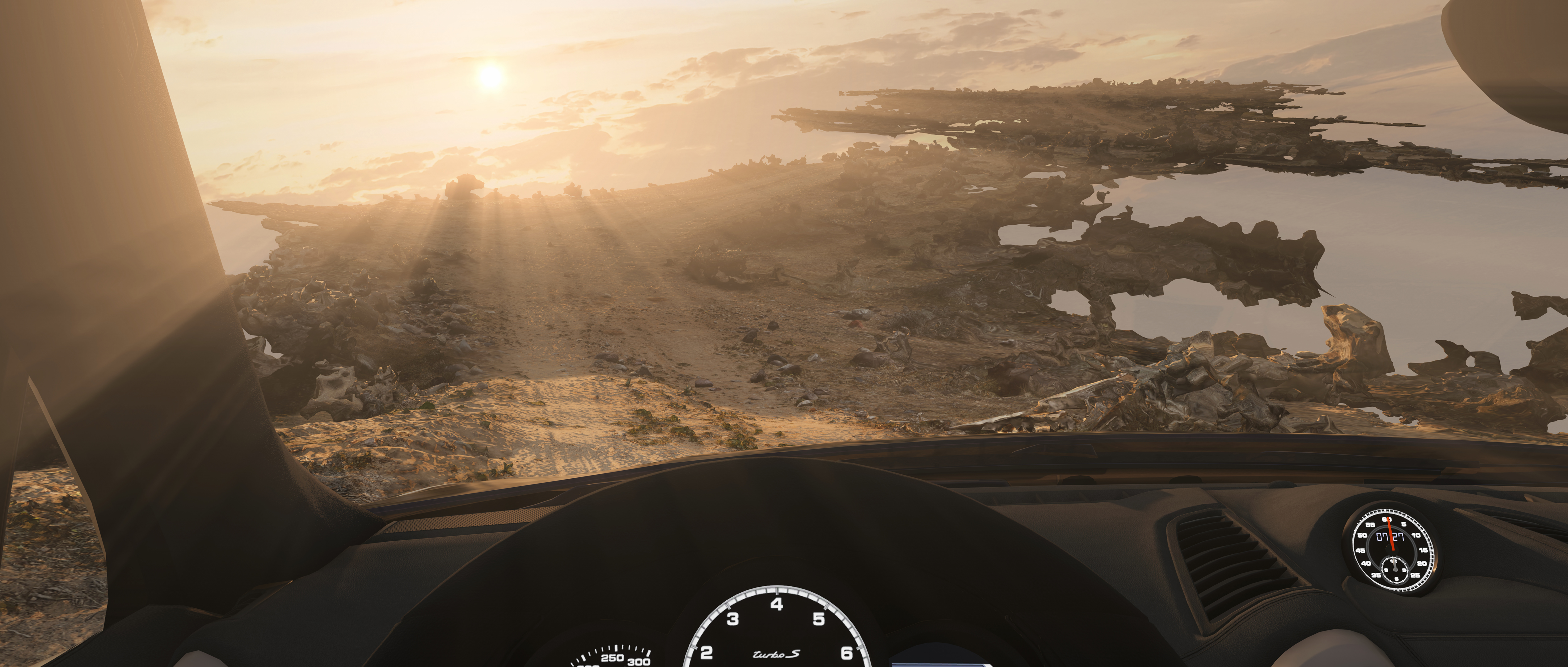
Below is an example of a test capture that was created with an iPhone and rendered in Assetto Corsa. It's a bit tough to drive on due to Assetto's limited tire model, but it's a lot like off-roading in real life!
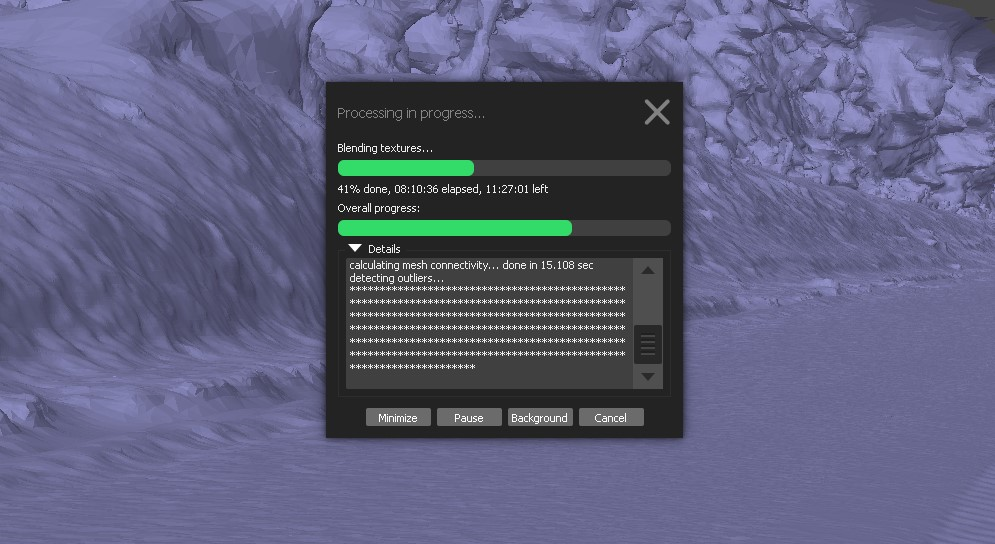
With photogrammetry, track creators take tens or even hundreds of thousands of photos of a real-life road or racetrack. These photos are then fed into special software that creates a 3D model and textures. Although the software can take a long time to process, sometimes days or weeks for a single step, the process runs independently while the artist is free to do other things.
The resulting 3D model is a 1:1 virtual recreation that matches the real world much better than something made using reference photos alone. This is often called a "digital twin" and is the ideal source for a racing simulation.
Current racing simulators can't actually handle all of the detail in a photogrammetry mesh. They need a low-poly version of the mesh in order to run at high framerates. Luckily, new game engines like Unreal Engine 5 can handle near-infinite polygon counts and deliver lifelike graphics, so we will soon see even more accurate and realistic racing sims.
But it's not just the track that photogrammetry can be used for. Photogrammetry is also used to create objects like trees, buildings, and even people. This means that track creators can add flourishes like buildings and roadside objects without having to model them by hand.
Much of the landscape around the pavement is captured at the same time as the road itself, meaning that artists spend much less time creating the environment and more time decorating it. There is no limit to the level of detail that sim racers can be fully immersed in.
To see for yourself what a difference photogrammetry makes in a racing game, download Alpine Meadows for Assetto Corsa and look around as you drive.

You'll notice the rocks alongside the road are detailed and varied, and some of the signage and houses along the road are included in the capture. Small details like piles of firewood stacked between driveways and horse tracks across the road near Alpine Meadows Stables make you feel like you're driving in the real world. Look closely and you'll even see trails their horses follow on riding tours!
Add in weather conditions and you'll forget you're in a racing simulator, not real life.

One of the most fun ways to experience the retail of a realistic physics mesh from photogrammetry is to try different cars back-to-back. See how they handle the bumps and off-camber turns. Compare lap times in round-trip laps or point-to-point racing events in uphill and downhill layouts.
Not only can you compete with yourself in time trials, but you can also race in and out of traffic with AI traffic cars traveling at high speeds. Racing an F1 car against 23 million-dollar sports cars up and down a public road at over 100 MPH (with the occasional crash) may not be as realistic as competitive racing on a track, but it sure is fun!

While there are many benefits to photogrammetry, there are also some challenges.
First, if you don't know how to do it yourself, it can be very expensive to hire someone to go out and take photos of an entire track or road.
Second, photogrammetry requires a very specific shooting method, and the weather must cooperate to get the best results.
Third, the entire process is very time consuming and can often take weeks or even months to complete.
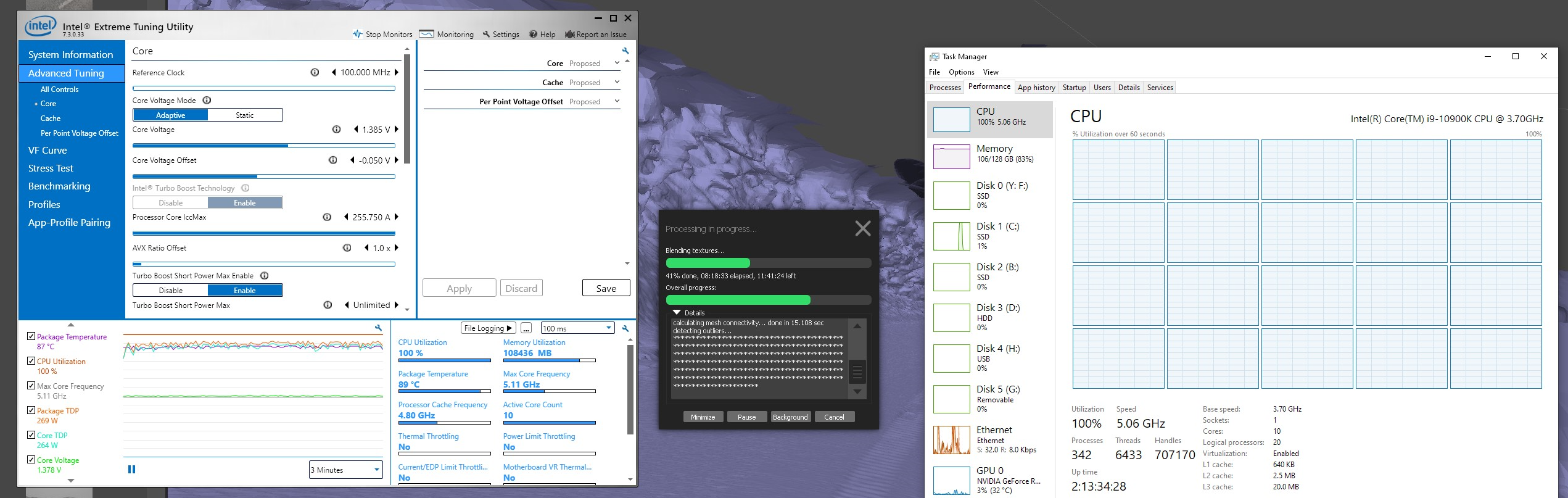
Photogrammetry requires a high-end PC that can handle demanding software, and you can't use that PC for anything else while processing a project. For very large projects, a network of render nodes is recommended.
It's worth mentioning that it's very common for Windows computers to crash during lengthy processing sessions since photogrammetry uses 100% of your system resources for long periods of time. Crashes are more common if your CPU is overclocked, which is almost mandatory for photogrammetry!
Once the mesh is generated, the remainder of the process is fairly easy depending on your comfort level with 3D modeling. Photogrammetry meshes and textures require some special considerations when editing them, but are compatible with existing game engines as long as you follow the game's conventions.
The future of photogrammetry in sim racing game development is looking very bright. New software is making it easier and faster to process large numbers of photos, and more game developers are becoming familiar with the process and the results it can produce.
One of the best things about photogrammetry is that it can be used to create not just tracks, but also drivers. That's right, with enough photos, you can use photogrammetry to create an almost perfect replica of yourself in-game. And as you can imagine, this makes for a much more realistic driving experience overall, especially when you look in the mirrors in VR!
Want to be turned into a driver for Assetto Corsa? Sign up for our email newsletter to find out when we are launching our Driver Scanning service. We will be ready to launch by Spring 2023.
One of the challenges facing great game developers today is creating a realistic driving experience that can be enjoyed by players around the world. With photogrammetry, that challenge becomes much easier. Not only does photogrammetry allow for greater levels of detail, but it also allows for greater accuracy in reproducing real-world environments and tracks.
In the near future, we can expect to see even more realistic driving experiences in games thanks to photogrammetry. Tracks will be more accurately reproduced, with greater levels of detail down to the smallest rock or sign. Cars will handle more like they do in real life, and weather conditions will add an extra layer of realism.
It's safe to say that the future of photogrammetry in sim racing game development is looking very bright!
If you would like to support the development of more photogrammetry projects, the best way to do so is by becoming a patron of Real Sim Roads on Patreon or joining here on our website. Becoming a Patron or website member gives you access to our releases like Alpine Meadows and supports the development of our quarterly releases.
Every three months, we will release a new photogrammetry road or track project for sim racers to enjoy. Our roads are available to our patrons and website members, and we offer discounts that are exclusive to our website. You'll also get access to our official Assetto Corsa server and an exclusive Drive Club Members Only section on Discord.
Our new work in progress an epic and dangerous canyon road in Malibu, CA with hairpins that climb over 30' in elevation! It's perhaps the most insane road in Southern California. Here's a sneak preview. On the map, the blue side is tight, twisty, and treacherous, and we will also include the gray side which is much faster and straighter. Connected at the top via intersection and below via PCH, this will make for one heck of a circuit!

If you're not interested in becoming a Patron, you can also support us by donating through PayPal or by sharing our content with your sim racing community. Our goal is to bring the world's most thrilling road and track experiences to the best sim racing games out there!
To celebrate our launch, we are offering memberships starting at $19 per month, which will help us cover the costs of hardware, software, capturing, and reconstructing these roads. We are creating the most amazing sim racing experiences in the world! With your support we can continue to bring these amazing next-gen experiences to the sim racing community.
Our long-term goal is to combine several captures into one massive free roam map, and from there capture an entire area with side roads and more on our way to an ultimate goal of an entire sim racing world.
If you're looking for a more realistic racing simulator experience, look no further than tracks made with photogrammetry. With this new technology, track creators can create virtual replicas of real-life roads and racetracks that are far more accurate than those made using traditional methods. So if you're ready to take your sim racing to the next level, be sure to check out tracks made with photogrammetry!
Not sure where to find a photogrammetry track? We've made the most realistic mod ever created for Assetto Corsa using photogrammetry and it's available to download here.
Let us know what you think of the future of photogrammetry in sim racing by leaving a comment below!
.jpg)
Looking for a breathtaking driving experience? Look no further than Alpine Meadows Rd. This stunning alpine landscape is home to winding roads and fast corners that will test even the most experienced drivers. Whether you're looking for a challenge or to take in the scenery, Alpine Meadows is worth downloading!
%20(Large).jpg)
.jpg)
%20(Large).jpg)